Thinking about whether to buy or rent in Olympia Fields this year? With home prices in the low to mid $300Ks and rents that jump around from month to month, it can feel hard to read the market. You want a clear, local way to compare costs and make a confident decision. In this guide, you’ll see the latest Olympia Fields numbers, a simple price-to-rent test, and three practical scenarios you can plug into your own budget. Let’s dive in.
Olympia Fields at a glance
What the numbers say
As of Feb 2026, the median sale price in Olympia Fields is about $334,250 (Redfin, Feb 2026). Zillow’s smoothed home-value index shows roughly $322,000 (ZHVI, updated Feb 28, 2026). These two measures often differ because one reflects recent closings while the other smooths trends over time.
Keep in mind that Olympia Fields is a smaller market. A few high or low sales in any month can shift the median more than you’d expect. Always compare these signals with current MLS comps for your specific property type.
Rent signals today
Zumper reports a median rent of about $1,750 per month for Olympia Fields (Mar 2026). Zillow’s rental feed is showing very few active listings right now, which can push the average up near $3,000 to $4,000 when a single high-priced house is on the market. In practice, plan for a broad range. Many renters will see something like $1,200 to $3,500-plus depending on size, condition, and whether the home is a single-family house or an apartment.
Why prices and rents diverge here
Olympia Fields is mostly single-family and largely owner-occupied, with historic neighborhoods shaped around Olympia Fields Country Club. That structure limits the number of apartments and means the rentals you do see are often single-family houses, which price differently than typical apartments. On the lifestyle side, two Metra Electric stations in the village provide express service to Millennium Station in roughly 40 minutes, a useful perk if you commute to the city. You can review local transit details on the village’s transportation page at the Village of Olympia Fields transportation page.
How to run the rent vs. buy test
Start with the price-to-rent ratio
A simple first filter is the price-to-rent ratio: price divided by annual rent. Many consumer guides note that under about 15 can lean toward buying, 15 to 20 is a gray zone, and above 20 can lean toward renting. It is just a rule of thumb, not a decision on its own. For a clear explanation, see this overview of the price-to-rent ratio.
Formula: Price-to-rent = Home price ÷ (Monthly rent × 12).
Below are three Olympia Fields scenarios using current local figures. Each number is labeled with the source and date, and you should swap in your own details.
Scenario A: Median-market case
- Price: $334,250 (Redfin, Feb 2026)
- Median rent: $1,750 per month (Zumper, Mar 2026)
- Price-to-rent: 334,250 ÷ (1,750 × 12) ≈ 15.9
Payment example at 20% down: $334,250 price, $66,850 down, $267,400 loan, 30-year fixed at about 6.00% principal and interest ≈ $1,603 per month (Freddie Mac PMMS, week of Mar 5, 2026, via press release). See current rate trends here: Mortgage rates hold steady.
Add common ownership costs:
- Property taxes: median about $8,687 per year, or roughly $724 per month (Ownwell, Olympia Fields profile, 2026). Source: Ownwell’s Olympia Fields property tax trends
- Homeowner insurance: approximate placeholder $1,500 per year, about $125 per month
- Maintenance: rule of thumb about 1% of home value per year, about $279 per month on a $334,250 home
Approximate total monthly owner outflow: $1,603 P&I + $724 taxes + $125 insurance + $279 maintenance ≈ $2,730 per month. Compared to the median rent of $1,750, renting looks cheaper month to month in this scenario. The trade-off is that ownership builds equity and may offer tax benefits if you itemize. Your final decision often comes down to your timeline, plans, and comfort with upfront costs.
Scenario B: Single-family renter
If you need a single-family rental, the rent is typically higher than apartment medians. Recent house-for-rent averages around $2,700 per month in local comparables (Zumper, Mar 2026). With the same $334,250 price, the price-to-rent becomes 334,250 ÷ (2,700 × 12) ≈ 10.3. On this filter, buying looks more favorable if you are comparing a like-kind single-family home.
Scenario C: High-rent outlier
When local rental inventory is thin, averages can be skewed by a single listing. Zillow’s rental feed recently displayed very few listings and a $3,000 to $4,000 average in that tiny sample. If you used $4,000 per month, the price-to-rent would be 334,250 ÷ (4,000 × 12) ≈ 7.0, which strongly favors buying. This is a cautionary tale. Always check how many listings a data source is using and compare multiple sources before you draw conclusions.
Monthly cost comparison
Ownership costs to budget
Owning a home comes with recurring expenses. Build a realistic monthly view:
- Mortgage principal and interest: varies with rate, loan type, and down payment. Use a current lender quote.
- Property taxes: Olympia Fields’ median tax bill is about $8,687 per year, or around $724 per month, though your parcel may differ based on value and exemptions (Ownwell, 2026). See Ownwell’s Olympia Fields profile.
- Homeowner insurance: get a quote for the address and construction type.
- Maintenance: a simple rule of thumb is about 1% of the home value per year.
- HOA dues: only if applicable to the community.
- Utilities: budget for water, sewer, electric, gas, and internet.
For a plain-English primer on what to include when comparing rent and buy costs, here is a helpful summary of ongoing homeowner expenses.
Upfront costs and break-even time
- Down payment: from about 3% to 20% or more depending on your loan program.
- Closing costs: often 2% to 5% of the purchase price, including lender and title fees.
- Break-even horizon: because of transaction costs, many buyers look at a 3 to 7 year holding period as a baseline to make buying pencil out. The right number for you depends on local appreciation, your interest rate, and how much you put down.
Lifestyle factors that matter
Beyond the math, consider how you plan to live:
- Renting gives you flexibility if you expect a job change or want to try different neighborhoods before settling in.
- Buying gives you control over the space, the ability to renovate to your taste, and long-term equity building.
- If you are comparing a single-family home lifestyle, remember that single-family rentals in Olympia Fields often price higher than apartments because the stock is limited.
Neighborhood and commute notes
Housing stock and setting
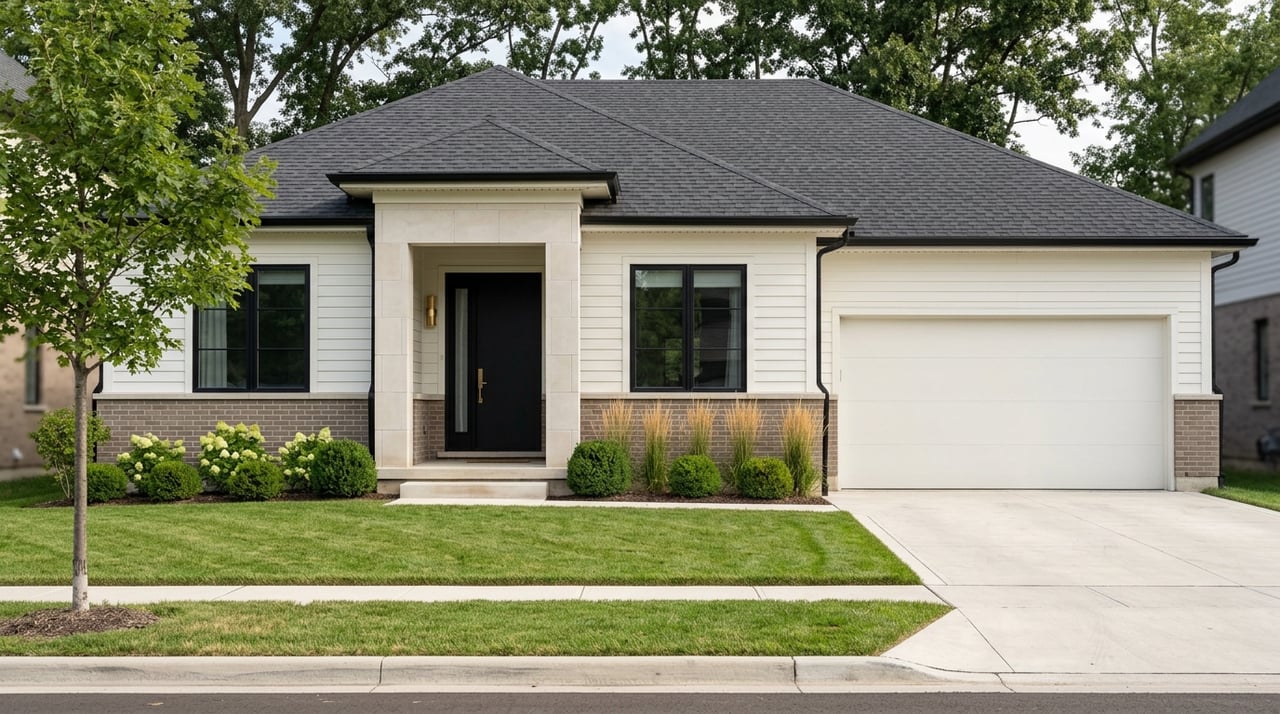
Olympia Fields is known for its single-family neighborhoods and a long history tied to Olympia Fields Country Club. The village’s planning materials highlight a community pattern where owner-occupancy is high and larger apartment complexes are limited. This background helps explain why local rents can swing more than in areas with more apartments.
Transit and commute options
The village is served by two Metra Electric stations, Olympia Fields and 211th St., with express service to Millennium Station typically around 40 minutes. For route details and schedules, see the Village of Olympia Fields transportation page.
School districts and boundaries
Parts of Olympia Fields fall into multiple elementary and high school districts, including Flossmoor SD 161, Matteson SD 162, Rich Township HSD 227, and Homewood-Flossmoor HSD 233. School boundaries can influence demand and should be confirmed at the parcel level using official district maps and the Cook County Assessor. You can also review the village’s Resident Handbook for general local information.
A simple worksheet you can use
Use this quick process to test your numbers at home:
- Gather local figures
- Home price you are targeting
- Your down payment and loan type
- Current mortgage rate quote for your credit profile
- Estimated property tax for the parcel, insurance quote, and HOA if applicable
- Comparable monthly rent for a like-kind home in Olympia Fields
- Run the price-to-rent filter
- Compute price ÷ (rent × 12)
- Under ~15 can lean buy, 15 to 20 depends on your horizon, above 20 often leans rent
- Build two monthly budgets
- Owner: P&I + property tax + insurance + maintenance + HOA if any + utilities you would pay
- Renter: rent + utilities you would pay
- Compare 3-year and 7-year horizons
- Estimate how long you plan to stay
- Factor moving costs and transaction costs
- Weigh the non-financial factors that matter most to you
- Pressure-test with local experts
- Pull current MLS comps for your price point
- Verify parcel-level taxes with the Cook County Assessor
- Get quotes from 2 to 3 lenders for rate and closing costs
- Sample live rental listings to confirm a realistic rent for a comparable home
What this means for you in 2026
If you are comparing an average apartment to buying at today’s median sale price, renting may be cheaper month to month. If you need a single-family rental, buying looks more favorable on the price-to-rent filter and may be closer on the monthly budget too. Your exact answer will depend on your down payment, rate, the home’s tax bill, and how long you plan to stay.
If you want help running the numbers for a specific address or setting up a side-by-side rent-versus-buy plan for your situation, reach out. With deep local experience in Olympia Fields and the south suburbs, Christina Horne can pull current comps, confirm taxes, and connect you with trusted lenders so you can decide with confidence.
FAQs
What is the current median home price in Olympia Fields?
- The median sale price is about $334,250 as of Feb 2026 based on recent closings reported by Redfin, with normal month-to-month swings in a small market.
What rent range should I expect in Olympia Fields?
- Recent data shows a wide range from around $1,200 to $3,500-plus depending on property type, with a median near $1,750 per month as of Mar 2026 and higher rents for single-family homes.
How do property taxes affect monthly payments locally?
- The median annual tax bill is about $8,687 in Olympia Fields, which is roughly $724 per month, though actual taxes vary by parcel and exemptions, so verify the specific property.
What mortgage rate should I use for estimates today?
- For example math, a 30-year fixed near 6.00% was reported the week of Mar 5, 2026, but you should get live quotes since rates change daily and vary by borrower.
How long should I plan to stay for buying to make sense?
- Many buyers use a 3 to 7 year holding period as a baseline to offset transaction costs, but your break-even depends on your rate, down payment, taxes, maintenance, and expected appreciation.