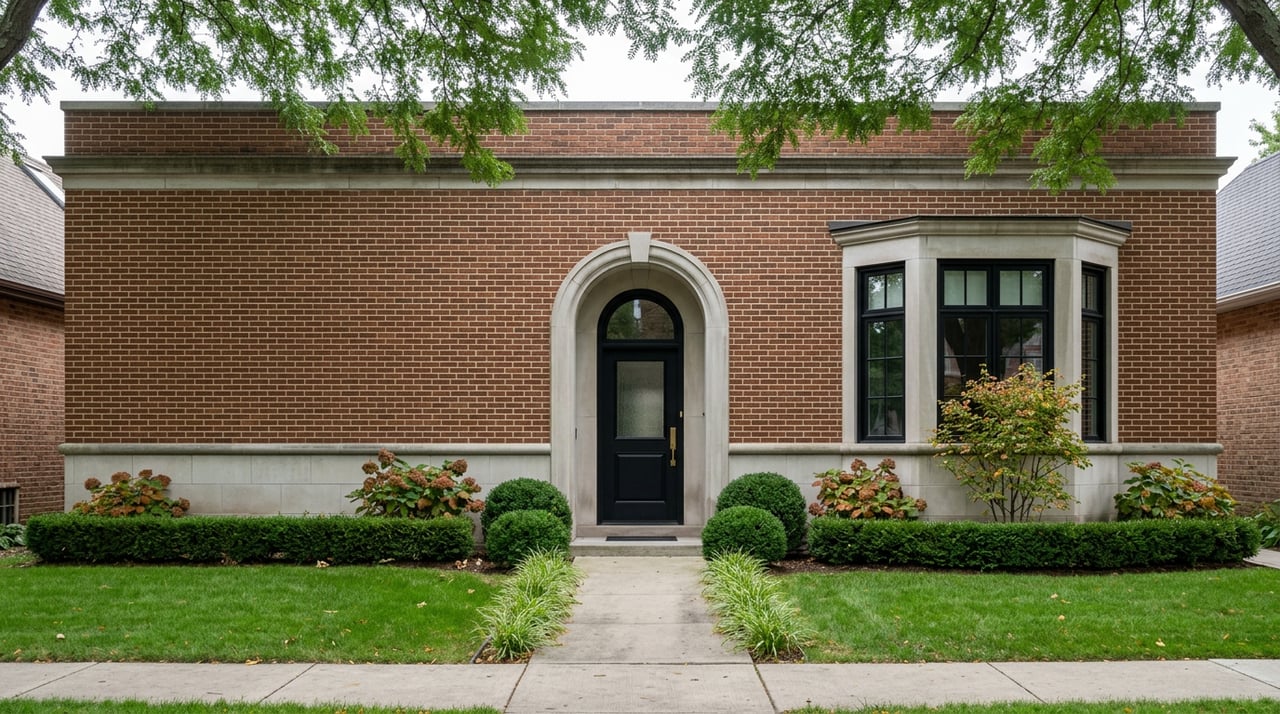
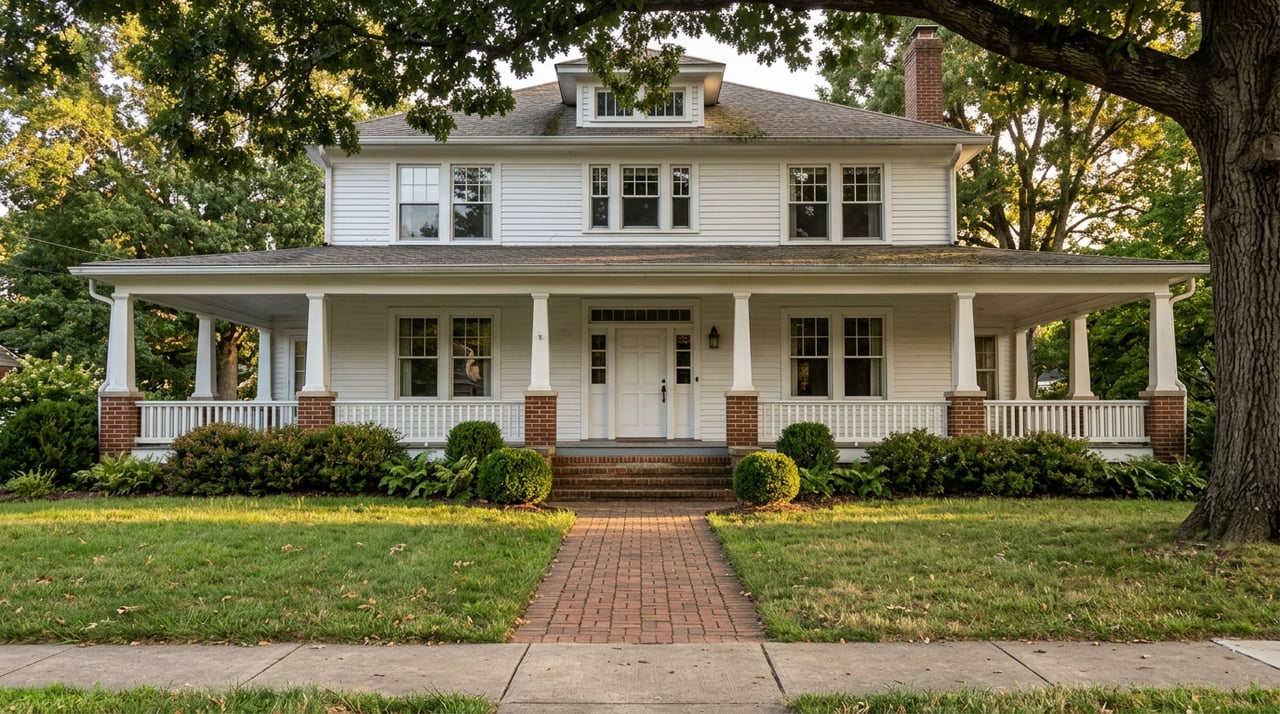
In February 2026, the Chicago Sun-Times reported that a 132-year-old house near 91st Street and Longwood Drive was getting a second chance. The Eugene S. Pike House, designed by architect Waterman and sitting at the southern edge of Dan Ryan Woods, had sat vacant and deteriorating under the Forest Preserve District of Cook County's ownership for years. Then the county approved a partnership with the newly formed Eugene S. Pike House Foundation and the Beverly Area Arts Alliance, backed by a $1.5 million state grant that had been sitting earmarked since 2024 but couldn't be released until earlier this year. Stabilization work was slated to begin that spring, with the long-term goal of turning the house into a community cultural center.
It's a good story. It's also a preview of something every buyer eyeing a home on Longwood Drive should understand before they write an offer: this stretch of Beverly comes with an active regulatory relationship, not a decorative label.
The label covers more streets than you think, and more than the big stuff
Longwood Drive isn't the only historic layer in Beverly. There are three separate designated districts stacked into this part of the neighborhood, each with its own boundary and its own effective date:
| District | Designated | What it covers |
|---|---|---|
| Longwood Drive Historic District | 1981 | A 12-block ridgeline stretch from roughly 9800 to 11000 S. Longwood Dr. |
| Ridge Historic District | 1976 | Runs through the core of Beverly Hills and Morgan Park, more than 3,000 buildings |
| Beverly/Morgan Park Railroad Stations District | 1994 | Six surviving Rock Island commuter stations at 91st, 95th, 99th, 107th, 111th, and 115th Streets |
Most of Beverly sits outside all three. That matters, because boundaries don't always line up with what a listing photo implies. A house two blocks off Longwood Drive can have a completely different renovation calculus than one on it.
Inside the boundary, the assumption most buyers carry into a purchase is that landmark review only kicks in for demolitions or additions. It doesn't. The Beverly Area Planning Association is direct about what actually triggers city review: siding, doors, windows, fences, porches, and brick all require permission before you touch them. That's not a renovation wish list. That's routine home maintenance for anyone who owns a hundred-year-old house.
The timeline nobody puts on the listing sheet
Here's the part that catches people off guard after closing, not before it. Chicago's landmarks ordinance requires the city department that receives a permit application to forward it to the Commission on Chicago Landmarks within seven days, and the Commission then has 15 days to issue a written preliminary decision. That sounds fast on paper. In practice, local permit-tracking data from 2026 puts the real-world add-on for landmark review at somewhere between 4 and 12 weeks stacked on top of whatever a standard Chicago building permit already takes, and a standard interior alteration permit in this city already runs 6 to 16 weeks before Landmarks ever enters the picture.
Translate that into a homeowner's calendar. Replace a rotted porch railing on a non-landmarked block and you might get a permit issued at the counter. Do the same repair on a contributing building inside the Longwood Drive district and you're realistically looking at a spring project that doesn't clear review until summer. The city's own Historic Preservation Division encourages a pre-permit submission specifically because it can shave weeks off the process, which tells you something about how long the process runs without one.
None of this shows up on a for-sale flyer. It shows up the first time a new owner calls a contractor about a fence.
Where the money actually is, and where it isn't
If you've heard that historic designation comes with tax breaks, you're only partly right, and the part that's wrong is the part that matters most to a homeowner. Cook County's Class L property tax incentive and the city's Citywide Adopt-a-Landmark Fund both exist to support preservation, and both explicitly exclude single-family homes. Class L is built for commercial, industrial, and income-producing buildings. The Adopt-a-Landmark Fund carves out single-family homes and buildings of six units or fewer by name. If you own a single-family house on Longwood Drive, neither program is written for you.
What does reach an owner-occupant is smaller but real. Landmarks Illinois runs a Historic Architectural Rehabilitation Grant Program that reimburses residential owners in designated historic districts up to $20,000 for restoring exterior architectural features, with applications typically opening in January and closing in early spring. The Beverly Area Planning Association also points residents in landmark districts toward the state's Property Tax Freeze and Preservation Easement programs, both aimed at exactly this kind of owner. Landmarks Illinois notes that the city offers permit fee waivers on renovation permits, though those require an application and approval rather than happening automatically.
The honest version of this story isn't "landmark status pays for itself." It's that the assistance available to a single-family owner is targeted and modest, while the review requirement is broad and applies to nearly every visible surface of the house.
What the address is actually pricing in
This is where the numbers get interesting. A six-bedroom Colonial at 10628 S. Longwood Drive, sitting inside both the Ridge and Longwood historic districts, sold on July 1, 2026 for $565,000. That same month, a two-bedroom townhome on Walden Parkway, a few blocks away but outside the landmark boundaries, sold for $330,000. Beverly's broader housing market, measured across the whole neighborhood, showed a median sale price around $395,000 in February 2026, down modestly from the year before, with homes typically moving in about 60 days. New listings across the neighborhood carried a median asking price closer to $430,000 to $455,000 through the spring and summer.
Sitting those numbers next to each other tells you something a citywide or neighborhood-wide median can't. The premium commanded by a Longwood Drive Colonial isn't just about square footage or bedroom count. It's the market pricing in the ridge lot, the century of craftsmanship, and yes, the regulatory framework that keeps a neighbor from replacing a Queen Anne porch with vinyl siding next door. Buyers are paying for permanence. They're also inheriting the paperwork that protects it.
That's not a reason to avoid these blocks. It's a reason to ask the right question before you fall for the house: is this address inside a designated boundary, and if so, what's already been approved on the property versus what a future owner would need to file for.
A few things worth clearing up before you sign anything
What happens if someone does exterior work without going through review first? It's a violation of the landmarks ordinance to perform work requiring a permit without the Commission's approval. Beyond the legal exposure, unpermitted work can complicate a future sale if a buyer's attorney or title company flags it during due diligence.
If you're weighing a house on Longwood Drive, or you already own one and you're wondering what a listing agent should be telling buyers about the district your house sits in, that's exactly the kind of address-level detail worth a conversation before you list or make an offer. I Sell Chicagoland has spent two decades working these south-suburban and south-side streets, and can walk you through what your specific address requires, what it's worth, and what to expect at every stage of the process. Reach out for a free home valuation or a sit-down consultation before your next move in Beverly.
This article is general information, not legal, tax or financial advice. Consult a qualified professional about your situation.