If you drove down Vollmer Road or past the Metra stop near Governors Highway this past weekend, you might have caught the valet tents and the extra traffic and figured it was a wedding season overflow. It wasn't. From September 18 through 20, the South Course at Olympia Fields Country Club hosted the 20th annual OFCC/Fighting Illini Invitational, a college golf tournament stacked with programs that regularly feed the PGA Tour and LPGA.
Fifteen teams played, and more than a third of the field entered the week nationally ranked. Florida came in at number one in the Golfweek preseason poll. LSU sat at number six. Illinois, the host program, was ranked eleventh. Texas A&M, Oklahoma State, Texas Tech, Alabama, Stanford and Georgia Tech all made the cut too. Illinois senior Max Herendeen carried preseason All-America honors into the week, and Oklahoma State arrived as the defending champion, chasing a tournament record it already shares with Illinois: three team titles apiece.
None of that made the front page of anything most residents read. It's the kind of thing you'd only know if you follow college golf closely, or if you happened to notice the leaderboard signage going up outside the clubhouse gates.
Two Courses, One Reputation
Most people who've lived in Olympia Fields for more than a few years know the club has hosted majors. What tends to get flattened in that memory is which course did the hosting. The North Course is the one with the résumé everyone recognizes: the 2003 U.S. Open won by Jim Furyk, the 2020 and 2023 BMW Championships, the 2017 KPMG Women's PGA Championship. It's the Willie Park Jr. design, the one with the plaques by the first tee honoring Bobby Jones and Walter Hagen, the one ESPN cameras show when they cut to Olympia Fields during FedEx Cup season.
The South Course does different, quieter work. It's the one that just spent three days hosting a field that will put players on tour within the next few seasons, on a par-70 layout stretching 7,215 yards. It was originally laid out by Tom Bendelow in 1915, renovated by Steve Smyers in 2007, and most recently restored by architect Andy Staples in 2023. If the North Course is where the club shows off its major-championship pedigree, the South Course is where the next generation of that pedigree gets built, one September at a time, mostly unnoticed by the village around it.
The Course Predates the Village That Shares Its Name
Here's the detail that surprises even longtime residents: the country club is older than Olympia Fields the municipality, and it isn't actually part of it. Charles Beach chartered the club in 1915 and became its founding force, later organizing the effort to incorporate the surrounding residential area. The Village of Olympia Fields wasn't created until 1927, with Beach as its first president. But the club grounds themselves remain unincorporated today, sitting outside the village government's jurisdiction even though the village borrowed its name directly from the course.
There's more buried in that history. Beach didn't build one golf course. He built four, on nearly 700 acres, making Olympia Fields the largest private country club in the world at its peak, with a clubhouse so large its 10,000-square-foot locker room is still counted among the biggest in golf. That empire didn't survive the 1940s. World War II pushed the club into serious financial trouble, and it sold roughly half its land. Three of the original four courses were dismantled and their surviving holes stitched together into what's now the South Course. Only Park's fourth course, the North, stayed fully intact. So the course that hosted this year's LSU and Florida squads isn't a lesser version of the famous one next door. It's a patchwork of three separate 1915-to-1920 designs, reassembled out of financial necessity, that still tests some of the best amateur golfers in the country every fall.
What to Do About It Over Dinner
If the tournament gives you something to talk about, Olympia Fields already has the places to talk about it. Vintrendi Wine Company, a Black-owned micro-winery on Vollmer Road, runs a tasting room and small-plate menu that turns into a full evening on weekends, with live DJ sets on Fridays and Saturdays and a Sunday brunch that pairs a $35 brunch platter with live jazz. It's the kind of spot where a table of four can spend two hours without ever feeling rushed out, and reservations are encouraged for groups of that size.
A few doors down, also on Vollmer Road, Batter and Berries runs its own weekly Thirsty Thursday, a lower-key option if you want food and a drink without committing to a whole evening. Between the two, Vollmer Road has quietly become the corridor where Olympia Fields does its socializing, close enough to the club that a Saturday afternoon watching golf can turn into a Saturday evening without moving your car.
Seeing the Clubhouse for Yourself
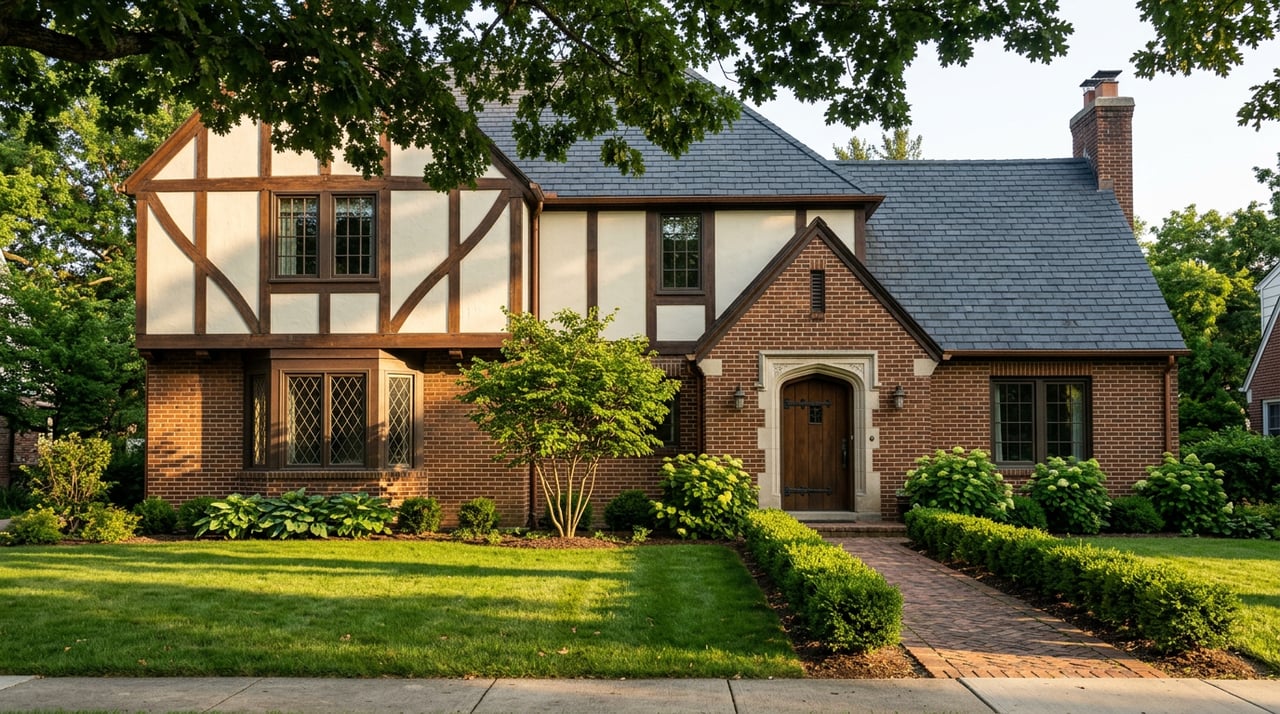
The tournament wrapped by Sunday evening, but the building it was played around is worth a closer look on its own terms. The Olympia Fields Historic Landmark Foundation runs guided tours of the clubhouse, the half-timbered Tudor building finished in 1925 at a cost of $1.3 million, topped by the 80-foot, four-faced clock tower that's become the visual shorthand for the whole club. Tours run by appointment on the first and third Monday of each month between April and November, which means there's still a window left this fall to see the inside of a building most residents have only ever seen from the road.
It's an easy way to turn an abstract piece of local history into something you've actually walked through. The clubhouse sits close enough to the Metra Electric District's Olympia Fields station that you could make a trip of it without needing to park at all.
Why Any of This Is Worth Knowing
None of this changes anything about property values or school boundaries or the things people usually search for when they type a neighborhood's name into Google. That's sort of the point. Olympia Fields residents already live next to a piece of golf history significant enough to have hosted four major championships and, this month, a field ranked among the top 25 programs in the country. Most of that significance happens quietly, on a course whose own history is a story of financial hardship and reassembly rather than uninterrupted glory.
Knowing that doesn't make the commute shorter or the taxes lower. It just means the next time you're stuck behind extra traffic near Governors Highway in September, you'll know to check the club's calendar before assuming it's a wedding.
If you're a longtime resident and this is the first you're hearing about any of it, you're not alone, and you're not the last. That's usually how the best local details work: hiding in plain sight until someone happens to be looking for them.
Whether you're settled into Olympia Fields for the long haul or just starting to think about what's next, I Sell Chicagoland keeps an eye on the details that make this stretch of the south suburbs worth knowing well. If a move is somewhere on your horizon, get in touch for a free home valuation or schedule a conversation about what your options actually look like right now.